Showing posts with label Classroom Management. Show all posts

04 January 2016

Did you read the instructions?

I'm sure any of my teacher friends will be able to relate to this post. I've been teaching for 9 years now, and I'm sure this would have to be the question I ask most frequently. Why am I writing about it? Just reflecting.

Today we were learning about time-lines in mathematics, and students had to create a time-line of a day in another class, using information provided in their book. I started the lesson with a demonstration, using our own timetable, of the various skills required. The biggest one was how do I make all that space show the correct amounts of time. After I'd demonstrated a couple, I had students continue the process on the whiteboard. Frustration abounded when the computer went into sleep mode (I've frozen the display) and I couldn't get it to come back again in exactly the same place. We worked around that, and it seemed like students were getting it, so I moved to the next step which was having students work independently in their maths journal.

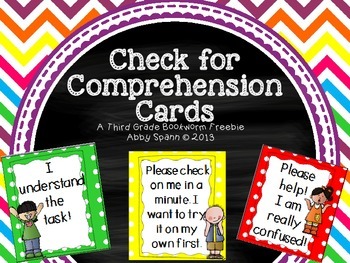
Check for Comprehension Cards FREEBIE
Here's the link to where I got these
Before we got started I introduced our new Check for Comprehension Cards, and showed the student page using the projector. We talked about some of the more tricky parts, and then I sent to off to get started. Unfortunately, I forget to actually read the instructions at the top of the page with the students. Ooops!

As I wandered around the room, most students had either green or yellow cards displayed, which was a good start. After giving them time to get started, I took another walk around the room, and discovered that none of them had actually read the instructions, or if they did they weren't following them. I called the whole class back to the mat, and asked who had read the instructions. About 3 hands went up. I asked one of those students why they hadn't used any coloured pencils, which is what the instruction indicated. Her reply shouldn't really have surprised me, given the cultural context. She said, "No-one else was using colour so I didn't either."

We then reviewed the two sentence instruction at the top of the page together, highlighting the one word some might not have known, and then I sent them back to work. Alas, I still had students using a single colour for the whole time-line, and others who didn't put anything on it at all. Looks like I'll need to review the activity tomorrow. I'll see how many actually get it right, and I might have to get some new copies of that page and do a full demo on the board!

Ah, the joys of teaching! My favourite question: "Did you read the instructions?" Thankfully this was a learning activity and not formal assessment!

17 June 2014

Exploring the Daily 5 - Chapter 9

Returning to our Core Beliefs

The final chapter of The Daily 5 addresses specific groups or individuals within the classroom and how these are dealt with, from a foundation of community, accountability, trust, and respect.

Barometer Children
This term is applied lovingly to those children who have a major impact on classroom climate. These children will usually require additional support to build stamina, but not necessarily every round or even every day. Four levels of support are suggested. Some children will only ever need level 1 support, while others will need level 3 or 4 support regularly. Foundational is the belief that, with appropriate support, every child can be successful.
Level 1: Reflection
I really appreciated this section. It reminded me of the need to look first at my own behaviour, and that things that I control, to ensure I am doing all I can to help these students be successful. It's about me taking time to reflect, as well as to check on a few things such as "Good Fit Books". Sometimes I might even need my own goal sheet to ensure my tone with students is positive and that I'm giving appropriate, timely, positive feedback.
Level 2: Extra Support
This level provides a respectful opportunity for children to get some extra practice at building stamina. While it does involve recess time, it's only a few minutes, since these children are often those who need recess the most. This level of support will help identify if further support is really needed.
Level 3: In-Class Modifications
This section provides details of ways to help specific children develop their stamina, acknowledging that it may take them longer to build stamina than some of the other children. It also allows for their shorter stamina without breaking the stamina of those who can work independently for longer periods. Tools such as sand timers, stop watches, kinaesthetic materials, and alternative reading materials are used, as well as individual stamina charts. Eventually the additional tools will not be needed, but there should always be the opportunity for students to return to the tools if necessary.
Level 4: Gradual Release of In-Class Modifications
This level is about providing additional "check-ins" with specific children during a round. This works well when the teacher moves from group to individual or individual to individual, rather than having students move to the teacher. Essential to this working is believing the best of our students even when their behaviour isn't perfect.

Guest Teachers
This section provides a sample lesson plan that can be quickly adapted for any planned or unplanned absence. It provides enough detail for any teacher to follow and allows students to support the teacher through well-established routines.

New Students to the Class
This section provides valuable tips on what to do when a new student joins a class part way through the year. Buddies are a key strategy, and new students also provide an ideal opportunity to review the Daily 5 I-charts with the whole class. When new students have lower stamina, this gives the teacher an ideal chance to do assessments with the new student, and to teach core lessons like how to choose Good-Fit books.

Parents
This section is about communicating the Daily 5 with parents. It includes a sample letter to parents to introduce them to The Daily 5.

Trusting Our Students and Our Teaching
This section reminded me that I don't have to get it all right first time, and that's OK. It highlights that I may not see evidence of learning in the same way as I have in the past, but I will see it in new, exciting, and authentic ways. I love the following comment from the authors:
"Our children help us learn to trust our teaching and prove that they deserve to be trusted to be independent. Our students rise to our high expectations, they meet high standards, and they willingly accept the responsibility to do so." (p.157)

So now you will have to wait until August 2014 when I get the chance to have a go at introducing The Daily 5 into my classroom here in Phnom Penh. Meanwhile, my next project is to thoroughly investigate The Cafe Book and see how I can use that alongside The Daily 5 in my classroom, using the resources I need to as part of our school wide curriculum.

For more of my reflections on "The Daily 5", check out these posts
Chapter 1: That Was Then, This is Now: How the Daily 5 Evolved.
Chapter 2: Our Core Beliefs: The Foundations of the Daily 5
Chapter 3: The 10 Steps to Teaching and Learning Independence
Chapter 4: What do you need to begin?
Chapter 5: Launching Read to Self - The First Daily 5
Chapter 6: Foundation Lessons

Chapter 7: When to Launch the Next Daily 5
Chapter 8: The Math Daily 3

Exploring the Daily 5 - Chapter 8

The Math Daily 3

"The essence of mathematics is not to make simple things complicated but to make complicated things simple." Stanley Gudder (p.121)

Having seen the success of the Daily 5 in literacy, the authors began using the 10 Steps to Teaching and Learning Independence in other curriculum areas. The next step was to apply the same principles of providing appropriate independent practise for students and opportunities for the teacher to work with individuals and small groups needing extra support, to mathematics. There was also a desire to provide students with activities that would lead to deeper understanding and problem solving. After refining the framework over time, what is presented in this chapter is the Math Daily 3:

  • Math by Myself
  • Math Writing
  • Math with Someone.

The activities for Math by Myself and Math with Someone provide practice on both current and recently completed units. Math Writing allows students to express their thinking and understanding through problem solving and problem writing.

Math Daily 3 Structure
As you would expect, Math Daily 3 uses a similar structure to the Daily 5, with short 7-10 minute focus lessons broken up by independent work time. The whole group lessons come from the school's math program, so Math Daily 3 can work whatever the program. With three focus lessons, the suggestion is the first lesson teaches the concept (I show), the next lesson is guided practice (we do), and the third lesson is problem solving related to the concept.

Math Daily 3 Overview
This section provides a sample lesson plan using the Daily 3. It helps me understand how I could break my lessons down into brain-friendly chunks for my students. It will definitely work with Go Maths.

What Do You Need to Begin Math Daily 3
While it is suggested that the Math gatherings take place in a different location to Literacy, that's not going to happen in my classroom. I simply don't have enough space. Another challenge is going to be wall space, but that can be overcome. One of the things I noted was that Math Daily 3 requires lots of materials such as manipulatives, dice, game boards, small whiteboards, etc. I'm sure I'll get creative as I find and organise these things. Specific suggestions for organising the various materials are provided, but it's really a matter of exploring options and finding out what works for me and my students.

Teaching the Foundation Lessons of Math Daily 3
This is a reminder of the Foundation Lessons from the Daily 5. One very important lesson, especially for Math with Someone and Math by Myself, is setting up and cleaning up materials.

Launching Math by Myself
Each Math by Myself activity will need to be taught as a focus lesson. This section gives a step-by-step demonstration of the 10 Steps as they apply to mathematics.

Teaching the Foundation Lessons: Math Writing
Math Writing is going to require some planning for me to implement. It is about students expressing their thinking and understanding using words, numbers and pictures. I need to clarify my thinking on this part of the program before I launch it.

Launching Math Writing
Again, the launch process involves creating an I-chart and this section provides details on the core behaviours and timing as well as introducing choice.

Launching Math With Someone
The foundation lesson, "How to Choose a Partner" is essential for Math with Someone. Each activity will also need to be taught. I already have a great source of activities for this options with the Go Maths Book of Facts and Fundamentals books. Once stamina is guilt, along with a variety of activities, choice can be extended to include Math With Someone.

The concluding paragraph highlights how students have experienced increased success in mathematics through tailored instruction and independent practice.

Some personal reflection
I'm thinking that I won't try to implement Math Daily 5 straight away, and maybe not even this year, until I get my head around using the Daily 5 and how I can make that work in my classroom. This isn't because I don't think it will work, I think it will, but rather because I know my limits when it comes to change. Introducing Daily 5 is going to make some pretty substantial changes in my classroom next year, and I need to be realistic about how much change I can cope with without overloading myself.

For more of my reflections on "The Daily 5", check out these posts
Chapter 1: That Was Then, This is Now: How the Daily 5 Evolved.
Chapter 2: Our Core Beliefs: The Foundations of the Daily 5
Chapter 3: The 10 Steps to Teaching and Learning Independence
Chapter 4: What do you need to begin?
Chapter 5: Launching Read to Self - The First Daily 5
Chapter 6: Foundation Lessons

Chapter 7: When to Launch the Next Daily 5

23 May 2014

Exploring the Daily 5 - Chapter 7

When to Launch the Next Daily 5

The key point here is that every group of students is different. Signs to watch for, which indicate readiness for the next Daily 5 choice include consistent demonstration of I-chart behaviours and stamina. Some suggestions are made about how much stamina is enough before introducing the next choice, but they are suggestions. It really will depend on the group of students.

Launching Work on Writing
I'm excited about this choice because I often come to the end of the year feeling my students haven't done enough writing. This will get them writing every day. An important point that was shared here is that there will still need to be separate "Writing Workshop" sessions when specific types of writing will be taught. In Daily 5 writing time, children choose whatever form of writing they like (story, poem, song lyrics, non-fiction, etc.) and then write for the whole time. Before launching Work on Writing, all the foundation lessons need to be taught, and then it's time to use the 10 Steps to Independence (Chapter 3) again. Because the children have been building stamina with Read to Self, it is likely that their starting stamina will be greater than it was for Read to Self, but not necessarily.

Introducing Choice
I love the honesty of the authors when they share their reluctance to "give up control" by giving choice. I know that won't be easy for me either. I also like what they say is at the heart of choice: "knowing the expectations, possessing the skills to meet them, being trusted to carry them out, and taking responsibility to do so." (p.111). Yes, the students are going to love being able to choose what activity they do at what time.

Check In
This involves a few minutes when children verbalise their choice and the teacher records it. Verbalising the choice breeds accountability, and the children get working quickly. Later in the process they will be able to state their goals and the strategies they are working on. Wow! I like that. This section includes tops for recording choices and for making the choice recording process go smoothly. An important point is made, that students who the teacher will be working with in a small group need to know this before choices are made and recorded so they are not disappointed.

Releasing Students into the Daily 5
This section suggests various ways to do this. It may be a case of try different ways and see what works for me.

Read to Someone.
When I read the list of benefits of Read to Someone I began to wonder why I hadn't tried it before. There are a considerable number of foundation lessons that need to be taught, and even re-taught, in order to make this choice work without chaos erupting, but those lessons, combined with the 10 Steps to Independence should result in a positive experience that the children enjoy and benefit from. Success will require planning and work, and the authors suggest this may well be the last choice to be introduced.

Listen to Reading
I already know the value of this, especially for my ELL students, so I'm determined to find a way to make this happen. Again technology access will be challenging, but I might be able to make a computer lab booking once a fortnight and do it that way. An interesting comment here is that not everyone needs to do Listen to Reading, although given my ELL population, I suspect most of mine will need to.

Word Work
This time provides children with essential practice for their individual word study needs. Primarily the focus seems to be on practising spelling or writing words that the students need to know or have discovered in their reading. This is definitely a "doing" choice that kinaesthetic learners will love. It also has the potential to become play, so clear instruction and development of an I-chart are important. The author's also suggest a ten minute limit, after which students put their materials away and move into either Read to Self or Work on Writing. That makes a lot of sense.

And that's the Daily 5. By the time all the choices are introduced, students should be developing habits of independent work in literacy, and the teacher will be busy working with students in small groups or individually, providing that much needed differentiated instruction.

For more of my reflections on "The Daily 5", check out these posts
Chapter 1: That Was Then, This is Now: How the Daily 5 Evolved.
Chapter 2: Our Core Beliefs: The Foundations of the Daily 5
Chapter 3: The 10 Steps to Teaching and Learning Independence
Chapter 4: What do you need to begin?
Chapter 5: Launching Read to Self - The First Daily 5
Chapter 6: Foundation Lessons

20 May 2014

Exploring the Daily 5 - Chapter 6

Foundation Lessons

This chapter provides additional information about the foundation lessons needed to implement each of the Daily 5 choices. It is supported by appendices and the content of other chapters and is very practical.

Read-to-Self Foundation Lessons
Much of this has already been covered so this section is very brief. Helping students choose places to sit where they can be successful is given attention here. Since I want the children to be successful, these tips will be valued.

Work-on-Writing Foundation Lessons
In this section I love the part where the authors discuss where children can get ideas to write about. I've often struggled with this, both as a student and as a teacher, so this section gave me some great ideas, as well as an example of how the lesson might come together.

Read-to-Someone Foundation Lessons
Lots of things to teach here, and lots for me to learn. This section highlights how children at different reading levels can work together and help each other. I especially appreciate the lesson on "Coaching or Time" as it models a constructive way for children to help each other without "telling the word".  Teaching children how to choose a partner might seem over the top, but I quickly realised how this lesson (taught in a variety of contexts) will enable every child to feel valued and respected every time they choose a partner or are chosen to be a partner.

Listen-to-Reading Foundation Lessons
This is going to be one of the most challenging Daily 5 for me to implement due to the limited supply of technology in our classrooms. I'm not complaining here, just telling how it is. I currently personally pay for a Reading A-Z & RAZ-Kids license, so I'm part way there, but the only computer in my classroom is my personal one (i.e. not school property). I'm going to think carefully about what to do here. Do I try and acquire an extra computer for students to use? If so, what do I get? Once I have one, where do I put it, and how do I ensure everyone has fair access. The other issue is Internet reliability. Most of the time it's OK, but this is still a developing country and Internet connections aren't always as fast or consistent as you'd hope. Some more thinking to do about this one.

Word-Work Foundation Lessons
This section didn't have a lot of detail, and it's an important area for my mostly ELL students, so I'll be doing some more reading and research on effective ways to build my students vocabulary and spelling ability.

In summary, this chapter was really practical and I now have a clearer understanding of how the foundation lessons are key to making the Daily 5 work well for both students and teacher.

For more of my reflections on "The Daily 5", check out these posts
Chapter 1: That Was Then, This is Now: How the Daily 5 Evolved.
Chapter 2: Our Core Beliefs: The Foundations of the Daily 5
Chapter 3: The 10 Steps to Teaching and Learning Independence
Chapter 4: What do you need to begin?
Chapter 5: Launching Read to Self - The First Daily 5
Chapter 7: When to Launch the Next Daily 5

16 May 2014

Exploring the Daily 5 - Chapter 5

Launching Read to Self - The First Daily 5

Assuming the children entering my class are able to read on their own for extended periods is a mistake I've made in the past, and it probably sets us all up for problems. Teaching this skill is at the core of the Daily 5. Building stamina takes time. Specific focused instruction is essential. I think this is going to be a key area of improvement in my teaching and, as a result, in my student's learning. Something I don't recall learning or reading about before this is "gradual release". This involves repeated teaching, discussion and practise of the desired behaviour, until it becomes a habit. This makes sense, as does "moving slowly at first in order to move fast later on." (p.67).

The First Day
This section describes a substantially different first day to mine in Cambodia, but there are elements I can incorporate into my first day. Some things I can do include: walls with minimal decoration (waiting for documentation of student learning) and have books all around the room. I love that they get straight into learning on that first day too, because that is something I definitely do anyway.

Three Ways to Read a Book
I love the idea of starting the first day with this lesson, and I learnt something new here too! The three ways to read a book are:

  • Read the pictures
  • Read the words
  • Retell the story.

Read the pictures isn't something I'd have thought to do with my fourth graders, but it makes a lot of sense. Even a "struggling reader" or a student who is relatively new to English (and that is not unusual in my school) can read the pictures. By teaching this as a valid way to read a book, I'm straight away ensuring that everyone can get involved. The validation of this as a legitimate way to read a book will help build up those who find reading in English a challenge.

I really appreciate the way the authors have given a full description of an actual lesson at this stage, because it helps me understand more clearly what they are talking about, and gives me ideas of how I can tackle it. I'm sure my lesson will be a little different to their lesson but I've got a great starting point. I also love the idea that uses a paired sharing process, but has the children share their partner's thinking with the whole group. As the authors mention, this is a great way to build good listening skills in the children.

The recommendation to teach only the first and second ways of reading in the first lesson also makes a lot of sense, to keep this focus lesson under 10 minutes, in keeping with Brain Research. Teaching retelling at a later time on the same day or the next day also makes sense. To actually teach "retelling" is something I've neglected in the past. I regularly use retelling  to evaluate comprehension, but I'm pretty sure I've never considered as a way to read a book, and I like that idea. The demonstration lesson also made it clear how the Check for Understanding comprehension strategy can be incorporated into the lesson without have to explicitly teach it.

At Last - We Launch Read to Self
I love this structure. This is where it all comes together, using the 10 Steps to Teaching Independence from chapter 3. One or two rounds might happen at this stage. Given my short (1 hour) language arts blocks, it's probably going to be one round now, with the chance of another round later in the day. One advantage I have is that I usually have a fair idea of student reading levels (based on the reading continuum and running records from the third grade teachers), apart from a few new students,so I can have some books selected ahead of time to get students started. I'd love it if the children who arrive at school early could come and refresh their book boxes then, but that's not how things work at my school, so I'll need to work out other times when they can do that.

Integrating Foundation Lessons
This section provides information on the other core lessons that can be taught during the first weeks of school, especially when the children's stamina for independent reading is limited. All the lessons are short (no more than 10 minutes), and they teach the foundational skills needed for the whole of Daily 5 to be effective and productive. Each part of Daily 5 has its own set of foundation lessons which are covered in some detail in either this chapter or the next. For Read to Self there are three foundation lessons:

  • Three ways to read a book (already covered);
  • I PICK Good Fit Books; and
  • Choose a successful spot.

Between foundation lessons and Daily 5 practice sessions it's important to have "Brain and Body Breaks", which usually involve movement of some kind and a change of focus.

I PICK Good-Fit Books
As I read this section I was excited by it. I've got a new idea to talk about with my students. I've also realised two mistakes I've made in my current classroom library book selection process. The first thing is that I tend to rush the children too much, and the second is that I haven't given them a strategy they can use outside the classroom. So I'm looking forward to intoducing:
I PICK Good-Fit BooksI select a book and look it over, inside and out.
P urpose: Why might I want to read it?
I nterest: Does it interest me?
C omprehend: Do I understand what I'm reading?
K now: Do I know most of the words? (page 74)
I love the analogy used in the sample lesson, where the authors compare choosing books with choosing shoes. This is going to be a fun lesson to teach. Another point emphasised in this section is that this lesson is not a lesson to teach once and then assume all the students have "got it". It will need to be revisited often during the year, with the whole class, with small groups, and with individuals in conferences. Being able to chose Good-Fit books is essential to developing a love of reading. There is one suggestion made about book shopping time that may work really well in my situation, and that is to have "Book Shopping" as a Daily 5 choice once a week.

Adding Other Foundation Lessons
This section provides examples of how foundation lessons for other Daily 5 choices are introduced on the first day. These foundation lessons include:
Work on Writing
  • Dealing with unknown words
  • Writing notebooks
  • What to write about
Read to Someone
  • Check for understanding
  • EEKK (elbow, elbow, knee, knee)
  • Voice level
  • How partners read
  • How to get started
  • Coaching or time
  • How to choose a partner
Listen to Reading
  • Set up the technology
  • Listen and follow along
  • Fair and equitable use
Word Work
  • Set up and clean up
  • Choose materials
  • Choose a successful spot
Obviously it's impossible to teach all these on the first day or two, but over the first few weeks they all need to happen, some more than once. The example lessons are clear and easily adaptable, and made a lot of sense to me. I hope they'll make sense to my students as well.

This chapter finishes with a great comment about teaching procedures. It's really important to think through exactly what procedures are desired (needed), because what we teach at the start of the year is largely what will happen for the rest of the year! It's really hard to change a procedure once it has been established, so I need to do a fair bit of thinking ahead on that one.

For more of my reflections on "The Daily 5", check out these posts
Chapter 1: That Was Then, This is Now: How the Daily 5 Evolved.
Chapter 2: Our Core Beliefs: The Foundations of the Daily 5
Chapter 3: The 10 Steps to Teaching and Learning Independence
Chapter 4: What do you need to begin?
Chapter 6: Foundation Lessons
Chapter 7: When to Launch the Next Daily 5
03 May 2014

Exploring the Daily 5 - Chapter 4

What do you need to begin?

So here is where the real planning starts. What do I need if I'm seriously going to implement the Daily 5 in my classroom next year? Is it going to cost a lot to get started? Can I really make it work in my classroom. After reading this chapter, I'm pretty sure I can do it, without it costing a lot, but there are some things I need to find and work out.

Chimes - The quiet signal
I love the idea of using a set of wind chimes to signal transitions. I'm going to have fun looking for something like that over the summer. Teaching students what the quiet signal means will be an important part of the first day, and even the first week, of school.

Chart Rack or Interactive Whiteboard
Well, I don't have either of these, but I do have some alternatives that will work. What I do have will be used for creating I-Charts, as well as teaching focus lessons. I've got a medium sized whiteboard on an easel that I can turn into a chart rack by adding a couple of big bull-dog clips to it, and I've got access to a data projector and document camera so I'll be using them as well. Data projector onto the ordinary whiteboard works really well, and I can always take a quick snapshot with the digital camera to make sure I've got a record of work we've done.

Tools, Not Toys.
This paragraph has suggestions for some tools that will help "barometer" students to develop their stamina at their own pace. These tools will allow them to have a short brain break without disturbing the rest of the class. They won't come out straight away, and I may not even need them, but I'll be prepared. Things I'll be including might be mini-Lego kits, pattern block, tangrams, puzzles, as well as timers (hour glass/electronic). I've already got some of the suggested items and I can have fun looking for some others over the break.

Book Boxes
The purpose of these is for the children to have immediate access to enough reading material right where they are, so they can work for extended periods of time without needing to move to get a new book. I'm going to have fun looking for sturdy and affordable solutions for this. This section also talks about the classroom library and I'm very grateful to those people who've helped me build mine over the past four years. I could still use more non-fiction books and more picture books, but I've definitely got enough to launch the Daily 5.

A Gathering Place and Focus Lessons
The gathering place is a very important part of the classroom. It is where whole class instruction happens and will need the relevant teaching tools. The author's suggest three pay-offs for having students sitting on the floor in a contained area: behaviour management, deeper thinking through discussion, and reduced distractions. I've already got one of these places in my classroom and I use it a lot. I'm looking forward to using it even more effectively in the coming year. Transitions to and from the gathering place provide brain breaks for students. Ten minute focus lessons should lead to better retention of concepts. Developing these ten minute lessons is going to be a challenge for me, but a very worthwhile one.

I-Charts
These are charts which are developed during learning. They state goals, expected behaviours, and other relevant information. At a minimum there will be one for each of the Daily 5 choices. They provide students with a visual reminder of what has been learnt and what is expected. I was excited earlier this year to discover proper sheets of poster card in various colours at my favourite stationery store, so I'll be stocking up on that.

Classroom Design
I found this section really interesting, with its suggestions for a variety of seating and working spaces. While my classroom isn't small, it's also not that large, so I'm going to need to do some creative thinking about how I can practically offer students varied seating options. I'm thinking I might see if I can swap one of my tables for a lower one, with smaller chairs, and maybe even some small foam mats that children can sit/kneel on to work at. I know that each year I have a few students for whom our current tables are a little high, so it's worth considering. I'll probably need to use the gathering place for independent work as well to allow more flexibility. Being comfortable is important for building stamina, so I've definitely got some thinking and planning to do on this one.

So, in summary, I have a lot of what I need, but there are a few things I still need to find and work out. Is it doable? Yes, definitely.

For more of my reflections on "The Daily 5", check out these posts
Chapter 1: That Was Then, This is Now: How the Daily 5 Evolved.
Chapter 2: Our Core Beliefs: The Foundations of the Daily 5
Chapter 3: The 10 Steps to Teaching and Learning Independence
Chapter 5: Launching Read to Self - The First Daily 5
Chapter 6: Foundation Lessons
Chapter 7: When to Launch the Next Daily 5

30 April 2014

Exploring the Daily 5 - Chapter 3

The 10 Steps to Teaching and Learning Independence

How do I teach students a new skill or behaviour? Do I give my students a chance to use all three (visual, auditory, and kinaesthetic) memory systems? Do I give adequate opportunity for practise? This set of 10 steps is based on an analysis of the behaviours being asked of students. The 10 steps set the Daily 5 apart from other classroom/literacy management models. Here goes with my reflections on the steps.

Step 1. Identify what is to be taught.
How often have I done this? If I'm honest, I would say not often enough. One of the first things I remember learning about public speaking was "tell them what you are going to say, say it, then tell them what you told them". Why is it that I so often fail to apply that to my teaching. It will take little effort on my part, but has the potential to make a big difference in my students' ability to focus on what we are learning.

Step 2. Set a purpose and Create a sense of Urgency.
I like to know why I should do a task, so it makes sense that the children would like to know this too. Recording the reasons for whatever I am teaching will help students have both purpose and urgency. I love the example in this section, but you'll just have to get hold of the book to enjoy it. It's worth it.

Step 3. Record Desired Behaviours on an I-Chart
To keep this step to a brain-friendly time frame there is no brainstorming here. The desired behaviours for teachers and students are recorded on the chart and briefly explained. An important point here is phrasing desired behaviours in positive terms, i.e. what we want to see, not a list of don'ts. e.g. "Walk Please" instead of "Don't Run".

Step 4. Model Most-Desirable Behaviours
It's one thing to see something written down, but seeing a classmate modelling correct behaviour is going to be much more powerful. Linking that correct behaviour to the I-Chart and to the purpose of the activity will also help the children remember.

Step 5. Model Least-Desirable Behaviours, then Most-Desirable Behaviours Again.
This step could be a bit of fun, but it's purpose if very serious. At first this step seemed counter-productive, but as I continued reading it made sense. By giving a student a chance to be silly, and highlighting why this behaviour won't result in students becoming better readers, followed by another demonstration of desirable behaviours (preferably by the same student), and linking that to the I-Chart and the purpose of becoming better readers, students are more likely to remember the right thing to do. Modelling some inappropriate (or least-desirable) behaviours also has the added benefit of preventing the "But I didn't know I shouldn't do that!" comments.

Step 6. Place students around the room.
The purpose of this step is to give all students a chance to experience the various different work places around the classroom. Given that my classroom is not large, I'm going to have do some creative thinking to come up with some different working spaces, while ensuring I have adequate work surfaces for other subjects. I've got some seeds floating around in my brain, so we'll have to see which ones I can germinate. A key point here was that this step needs to happen quickly so the first students don't run out of stamina before the final student is allocated a place to sit. Sending groups of students to places will help with that.

Step 7. Practise and Build Stamina
This is where the students get to practise what they have just learnt. They key point here, I think, is that building stamina takes time, and every group of students will be different. Some will build stamina rapidly while others take a little longer, and progress in smaller increments. The other important fact here is to be guided by the children's behaviour, rather than the clock. A visual record of progress in the form of a "Stamina Chart" means the children can see their progress.

Step 8. Stay out of the way.
This step happens at the same time as Step 7. It's time for the teacher to stay in one place and observe behaviour, without any interactions, verbal or non-verbal, with the children. This is the time to identify "barometer" children and to watch for signs that their stamina is done! This step also happens only during the learning phase. Once children have learnt to be independent, the teacher can conference with individuals or work with small groups, knowing the rest of the class is working independently.

Step 9. Use a Quiet Signal to Bring Students Back to the Gathering Place.
The authors were fairly quick to highlight that once one child's stamina is done it is time to bring the class/group back together. Using a "Quiet Signal" is a respectful and non-vocal way of doing this. More about this in Chapter 4.

Step 10. Conduct a Group Check-In; Ask, "How Did It Go?"
This final step gives students a chance to reflect on how they went, and to set a personal goal for the next session. The book shares one method of students sharing their reflections without having to say a word, but with the assurance the teacher notices how they went. Goals may be recorded or unrecorded, but the children will know their own goal.

So what's next. Sometimes another round of these 10 steps is appropriate, other times it may be time to move on to something completely different. Developing independence requires, and building stamina requires gradual extension of the practise periods. In the first weeks of school this might be 3 or 4 sessions during the course of a single school day. Reviewing the I-charts and modelling behaviours may seem time consuming initially, but it will ultimately result in those desired behaviours becoming default behaviours.

For more of my reflections on "The Daily 5", check out these posts
Chapter 1: That Was Then, This is Now: How the Daily 5 Evolved.
Chapter 2: Our Core Beliefs: The Foundations of the Daily 5
Chapter 4: What do you need to begin?
Chapter 5: Launching Read to Self - The First Daily 5
Chapter 6: Foundation Lessons
Chapter 7: When to Launch the Next Daily 5

28 April 2014

Exploring The Daily 5 - Chapter 2

Our Core Beliefs: The Foundations of the Daily 5

I love the quote on the front page of this chapter.
"Respected adults engage in respect-full interactions in which respectful students can bloom." Marie-Nathalie Beaudoin
The Daily 5 is built on a foundation of seven core beliefs. These are:

  • Trust and Respect
  • Community
  • Choice
  • Accountability
  • Brain Research
  • Transitions as Brain and Body Breaks
  • 10 Steps to Independence.

This chapter discusses the first six, while the whole of chapter 3 is devoted to the 10 steps to independence. So what did I find out about these core beliefs and how does that relate to me, teaching 4th grade at EWIS.

Trust and Respect
"Each child is worthy of trust and respect." (p.22)
"Trust is believing the best of others, even if actions and behaviours seem incongruent." (p.23)
In order for trust to be effective, it needs to be in the context of extended instruction and practice of the skills necessary for students to be authentically independent. There will be times when stamina falters, but that simply provides opportunity for reteaching and then extending trust again. By respectfully refocusing students, they know they can try again.

At EWIS, respect is an important part of our school culture, so there's certainly no conflict with The Daily 5 from that perspective. After reading this section, I can see how The Daily 5 structure will help me to be more respectful of my students each and every day.

Community

Building on trust and respect comes a caring and learning environment. EWIS is a community and shared experiences bind classes together. As each new year begins, classes change, students leave, new students come, and classes are mixed to form new class groups. Through the development of community, the children will help each other to "do the right thing", without the need for "authority" to step in. The example in this section highlights how students can help and teach each other, enabling all students to know they are valued members of the community and can be successful.

Choice

This is going to be a challenging area for me in some ways, because hand-in-hand with giving children choice is a release, by the teacher, of "control". We all like to feel that we are in control of our situation. Why should children desire that any less than adults. I think what is going to make it possible for me to relinquish some "control" is the way The Daily 5 teaches students to be independent. After a process of learning and developing stamina, the children will eventually get to choose not only what they will read and write, but when and where they do it, within the boundaries of the Daily 5 structure. With those choices will also come:

Accountability
"With the Daily 5, we needed to be accountable to our students by thoroughly teaching them what it looks like, feels like, and sounds like to participate in these productive tasks." (p.27)
Some of the things children become accountable for are choosing locations where they can work independently and maintain stamina, noise levels, and choosing "good-fit" books to read.
"Meaningful independence is the ultimate in student accountability." (p.28)

Brain Research

Our principal regularly gives us tips and hints based on her reading on brain research, so I know she'll like this bit. A key point in this section is the need to keep direct instruction to no more minutes than our students' age. This is going to be a challenge, but I'm already trying to do this to some extent with this year's class. Another important idea is to turn the 80/20 rule into a 20/80 rule, whereby 20% of class time is spent on direct instruction, and 80% is spent on meaningful practice, with focused, just-in-time coaching of individuals or small groups as needed. The third point in this section is that time spent reading is usually directly reflected in reading achievement. Short direct instruction time will give more time for reading!

Transitions as Brain Breaks

I'm sure most people reading this know how hard it is to sit in one position for extended periods of time. For me, a great example is the long haul flight from Australia to South East Asia (be that Thailand, Malaysia or Singapore). I have learnt to request an aisle seat because I just cannot sit for 8 hours without getting restless, and the aisle seat allows me to get up and move around without disturbing other passengers. Children also need to move, and the Daily 5 structure uses transitions to give children these opportunities to move. Daily 5 transitions provide:

  • A physical break from independent work
  • The movement children's bodies need
  • A brain break to help refocus
  • A natural timing for 10 minute focus lessons.

I particularly noticed that teaching children how to transition well is part of the 10 steps to Independence which are the focus of the next chapter so I'm looking forward to that.

For more of my reflections on "The Daily 5", check out these posts
Chapter 1: That Was Then, This is Now: How the Daily 5 Evolved.
Chapter 3: The 10 Steps to Teaching and Learning Independence
Chapter 4: What do you need to begin?
Chapter 5: Launching Read to Self - The First Daily 5
Chapter 6: Foundation Lessons
Chapter 7: When to Launch the Next Daily 5

27 April 2014

Exploring Daily 5 - Chapter 1

One of the daily challenges of a primary school teacher is getting students to read, and to progress in their reading. One part of the solution is ensuring that students have access to enough books at a variety of levels and from a variety of genres. I'm happy to say that I've definitely made progress in this area from when I first started at my current school. I have a classroom library of about 700 titles. I wish it had more non-fiction but that's a whole extra challenge. Another part of the challenge is that rarely are two students at exactly the same place in their reading development, even within a single fourth grade class. This year I started the year with students reading at beginning first grade level, through to fourth grade level. This is no-one's fault, it's just the way it is. Another challenge is getting kids to actually read whole books, and another is to get them to sit still and read for extended periods (like 15 minutes at a time). Yes, I know some kids will read quite happily for an hour or more, but many of my students don't have that stamina.

I've struggled with all of these challenges,and others, and after posting in a Facebook group, I kept getting recommendations to look at The Daily 5. When I discovered a new edition was due out in February I delayed purchasing until the new edition came out, and I am very happy that I did. The new edition is 8 years further on in development than the first edition, published in 2006. When I first received the book I read it in 3 days. 188 pages in 3 days. Fortunately I got it on a Friday afternoon, and yes, I still managed to get my prep and marking done that weekend. It was such a great read that I found it hard to put down. That's all very well, but it's going to take more than one reading to implement changes in my classroom, so I decided that I need to reread the book, and this time I'm going to take notes and reflect as I go. That's what this post is about. There will be a series of these posts appearing in the next couple of weeks. I process stuff by writing, and so I'm going to do it here, which will also help me be more accountable to finishing the process.

Chapter 1: That Was Then, This is Now: How the Daily 5 Evolved.

1. Children flourish through choice (p.3)
2. Application of brain research
3. Embraces individual needs - Barometer kids
4. Structure not content.

In the Beginning
As I read the author's descriptions of their early days of teaching I was able to relate, and I yearn for what they describe as their more recent experiences.

What Changed.
They created routines and procedures that fostered independent literacy behaviours in a way that those behaviours become habits. Children are trusted to make thoughtful choices during sustained independent work periods.

Management: Evolution
I love what I see in the Daily 5 column of the chart showing how their classroom management evolved, and I especially can see how it fits in perfectly with our school-wide goals. The Daily 5 Evolved through the emergence of five tasks: Read to Self, Read to Someone, Work on Writing, Listen to Reading, and Spelling/Word Study.

What Sets Daily 5 Apart
This section asked me to think about what I'm currently doing, which is The English Workbook, Novel Studies, Independent Reading Log & Task, and Write Rights. It then proposes that Daily 5 will result in meaningful and authentic reading and writing for extended periods of time, while allowing the teacher to conduct individual conferences and work with small groups. Daily 5 involves a mixture of whole-class focus lessons, small group instruction, and one-on-one conferences.

Overview of Daily 5
Read to Self comes first, using the Ten Steps to Independence to build stamina for this task. The other Daily 5 choices are added slowly, until eventually all are taught. At this point students have short sessions of all Daily 5 choices every day. The number of choices each day gradually reduces as stamina for independent work time increases. Read to Self and Work on Writing must happen every day, but children can choose the timing. Read to Someone is important for auditory learners (I'm going to have to work on that one) while other students (usually more advanced readers) may not actually need to do this. Word Work (Spelling) eventually becomes a small part of a Work on Writing session.

Daily  5 goes hand in hand with something called CAFE (Comprehension, Accuracy, Fluency, and Expanding Vocabulary). It provides productive work time for students not meeting with a teacher. Daily 5 is flexible enough to work with whatever classroom schedule you have, even if literacy time is broken into more than one block. Daily 5 is not content. Content is based on individual assessments and CAFE (a whole other book) helps with ways of teaching and assessing within the Daily 5.

So that's Chapter One. I'm excited and seriously thinking about how I might use Daily 5 in my classroom next year. Stay tuned for Chapter Two: Core Beliefs.

For more of my reflections on "The Daily 5", check out these posts
Chapter 2: Our Core Beliefs: The Foundations of the Daily 5
Chapter 3: The 10 Steps to Teaching and Learning Independence
Chapter 4: What do you need to begin?
Chapter 5: Launching Read to Self - The First Daily 5
Chapter 6: Foundation Lessons
Chapter 7: When to Launch the Next Daily 5